Let your viewers choose between two photos, ask a quick question, or film yourself making something. These are simple Instagram Story ideas you can start with. First decide what you want to do: start a conversation, explain something, or show an offer. Then create a short Story with one clear question or next step.
Below, you will find 14 ideas with example text, plus a simple way to test what suits you.
Instagram Story ideas for quick responses
Ask a question that someone can answer immediately. “What do you all think?” is rather broad. “Which photo should I print: the beach or the forest?” makes choosing easier. Stick to one question per Story.
All example texts below are fictional. Each idea states which sticker might fit. Check whether you can use it on your account. Is a sticker missing? Put your question or choices on screen and ask for a message, if viewers can message you.
The Story ideas from Birdeye for businesses also include polls and a behind the scenes look.
1. Let people choose between two options
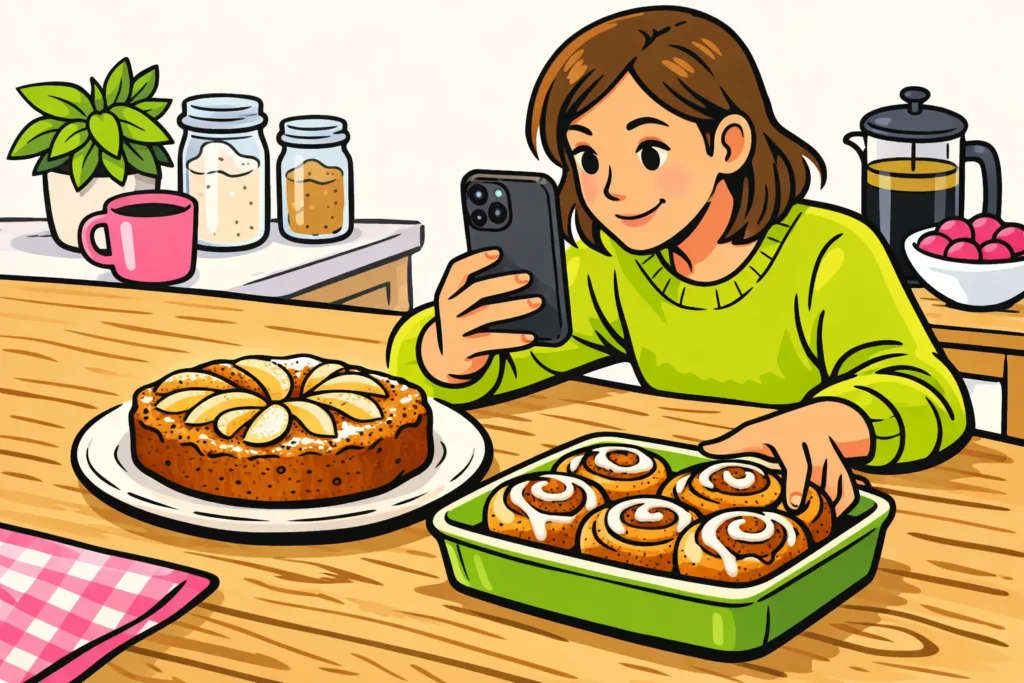
Use this when you still need to make a small choice yourself, for example for your next photo or video. Show both options.
Example text: “My next baking video: apple cake or cinnamon rolls?”
- Sticker: a poll, allowing viewers to vote for an option.
- What to count: votes per option.
- Note: a vote shows a preference. It does not mean that someone will also watch your next video.
2. Ask where someone is getting stuck
Do you explain something about cooking, drawing, or sports? Ask which part is difficult. Use the answers for a future explanation.
Example text: “What can you still not manage when making pizza yourself: rolling out the dough or getting a crispy base?”
- Sticker: a question sticker, allowing viewers to write their own answer.
- What to track: useful answers and topics that come up more often.
- Note: only promise to answer every question if you have time to do so.
3. Let people guess and give the answer
This works for something you can show close up. For example, film a detail of a clay pot. Show the whole object in the next part.
Example text: “What is lying here on my worktable?”
- Sticker: a poll with two possible answers.
- What to count: votes and follow up questions.
- Note: actually give the answer. Do not make a simple reveal unnecessarily long.
4. Ask about a relatable moment
Do you want to start a conversation without selling anything? Ask a question about something everyday. Share your own answer first if it fits your situation.
Example text: “Which book remained unopened on your bedside table this weekend?”
- Sticker: a question sticker.
- What to count: answers and conversations that follow from them.
- Note: do not share someone else’s personal answer in an identifiable way without permission.
Instagram Stories that show what you do
An ordinary step in your day may be something your viewers do not know yet. Show what you do and briefly explain why.
5. Film one behind the scenes step
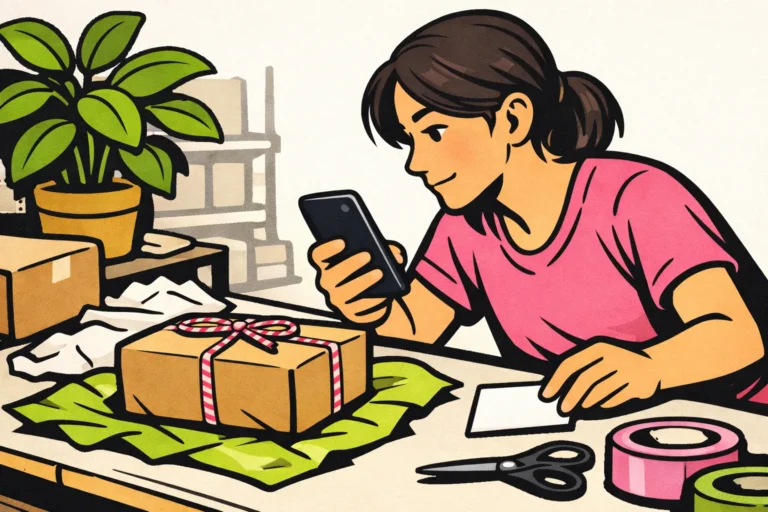
Record a short clip while doing a task or preparing something. A small online shop could, for example, show how a fragile cup is packed. Film close up and keep address labels out of view.
Example text: “This extra piece of cardboard keeps the cup in place.”
- Sticker: not necessary. The image with a short explanation is enough.
- What to count: questions about the packing or the cup.
- Note: careful packing does not guarantee that something will never arrive damaged.
6. Answer a frequently asked question on screen
Do you often get the same practical question? Show the answer. For example, film a bag while putting a bottle inside it.
Example text: “Does a large water bottle fit in this bag? I will show it with my one litre bottle.”
- Sticker: a question sticker for follow up questions.
- What to count: follow up questions and questions from people who want to buy the bag.
- Note: bottles can have different shapes. This example does not prove that every one litre bottle fits.
7. Show what has changed
Make a comparison where there is a visible difference, such as a new hairstyle, a tidied workspace, or a restored piece of furniture. Use the same lighting and camera angle as much as possible.
Example text: “The same cabinet, before and after sanding. The paint still needs to be applied.”
- Sticker: not necessary. State what you are showing with each image.
- What to count: questions about your approach.
- Note: lighting, filters, and the camera angle can make the difference appear greater. Do not attribute that entire difference to your work.
8. Share a photo of someone using your product
Did someone send you a usable photo? Ask for permission before sharing it. Add only information you actually know.
Example text: “This is how the small vase looks on a narrow windowsill. We are sharing this photo with permission.”
- Sticker: possibly a mention of the creator, if they want one.
- What to count: questions about the product in the photo.
- Note: one satisfied user does not mean that everyone will have the same experience. Do not present a paid collaboration as a spontaneous customer photo.
Would you rather collaborate with someone who creates photos or videos? Then read how to find Instagram influencers who suit your subject.
Instagram Story ideas for an offer or launch
When presenting an offer, show what someone gets, what it costs, and how they can order or book. Give that explanation before asking someone to buy something.
9. Show a new product in use
Use a video if a photo does not show clearly how something works. For example, film how you use a shopping bag and then fold it up. State the actual price if you sell it.
Example text: “This is how you fold this shopping bag so it fits in your coat pocket.”
- Sticker: a link sticker to the correct product page.
- What to count: link clicks, if you can see them, and questions about the product.
- Note: a click is not a purchase. Also make clear which items shown are not part of the product.
10. Explain what someone books
This is useful when people do not know exactly what you offer. For example, a coach can explain what an introductory meeting is like. State the actual duration and price.
Example text: “During the introductory meeting, we discuss your question and my approach. After that, you decide whether you want to continue.”
- Sticker: a link sticker to the explanation or the page where people can book.
- What to count: questions about the content and enquiries in which someone mentions your Story.
- Note: do not promise a personal result based only on an introductory meeting.
11. Announce something with an actual date
Is the start of a sale, registration, or event fixed? Share the date and time. Show something in advance and explain where people will be able to find it later.
Example text: “The new prints can be ordered from Saturday at 10.00:.” Show one print, for example.
- Sticker: a countdown sticker.
- What to count: questions about the start. Later, also track enquiries or orders in which someone mentions the Story.
- Note: do not write “last chance” if there is no actual end date.
Instagram Story examples for local businesses in the Netherlands and Belgium
Do you have a local business? Share something people can use today or soon, such as an available appointment, the lunch menu, or the location of your stall.
12. Share an available appointment at the hairdresser
Post this when an appointment has genuinely become available. Include the date, so it is also clear later when the appointment is available.
Example text: “There is an opening for a haircut tomorrow at 14.00:. Want to know whether your treatment fits? Send your question.”
- Sticker: a link sticker to the page where people can book.
- What to count: enquiries and the eventual booking.
- Note: a response is not yet a reservation. Confirm the appointment separately.
13. Help people choose at a lunch spot
Show two dishes and let viewers choose. Display the portions as you actually serve them and state the prices.
Example text: “Fancy hot soup or a fresh lunch today? These are our two options.”
- Sticker: a poll.
- What to count: votes and messages with questions about the dishes.
- Note: the number of votes does not predict how many orders you will receive.
14. Show where your festival stall is
Do you sell at a festival or market? Film a short section of the route to your stall. Then show the stall itself.
Example text: “You will find our stall next to the large tent, opposite the coffee bar.” Mention only landmarks that are actually there.
- Sticker: a location sticker, if the correct location is available. Also put the route in plain text.
- What to count: route questions and visitors who say they saw your Story.
- Note: do not call yourself an official festival partner if you are not one.
Testing Instagram Story ideas honestly
Choose two ideas with the same goal. Do you want answers to a question? Then compare a choice question with an open question. A product offer has a different goal and is therefore less suitable for that comparison.
- Choose what you want to count. Write down in advance what you want to know, such as how many answers or product questions you receive.
- Keep the subject comparable. For example, create two Stories about your next drawing video.
- Change one thing. Ask the question differently, but keep the length and type of image approximately the same.
- Choose comparable moments. Do not compare an ordinary afternoon with a public holiday or a major announcement.
- Try both formats more often. One result may be due to chance. Repeat the comparison a few times.
Keep your photos, texts, and goals together in advance. Sprout Social advises planning Stories to save time and provide variety. That advice does not prove that Instagram gives planned Stories extra reach.
Do you also post Reels? Then read about the best time to post Reels. Do not simply use those times for Stories: it is a different type of post.
How to measure responses to your Instagram Stories easily
Track what fits your goal. Do you want a conversation? Then look at the content of the answers. Do you want to fill an available appointment? Then what matters most is whether someone books. More responses do not always mean a better result.
| Your goal | What you track | What you cannot infer from that |
|---|---|---|
| Learn a preference | Votes per option | That all viewers share that preference |
| Start a conversation | Answers and different senders | That every answer comes from a new person |
| See interest in an offer | Product questions and link clicks, if you can see them | That every click or question leads to a purchase |
| Fill an appointment | Confirmed bookings where someone mentions the Story | That all bookings came through the Story |
A calculation example with responses
Suppose that in this fictional example you can see the number of accounts reached by both Stories. These are different accounts, not the number of times your Story was viewed.
Story A reaches 200 accounts and receives 12 answers. Story B reaches 300 accounts and receives 15 answers. Divide the number of answers by the number of accounts reached. Then multiply the result by 100.
- Story A: 12 ÷ 200 × 100 = 6 answers per 100 accounts reached.
- Story B: 15 ÷ 300 × 100 = 5 answers per 100 accounts reached.
So B receives more answers in total. A receives more answers in proportion to the number of accounts reached.
This does not mean that 6 percent of viewers responded to A. One account can send multiple answers. Do you want to know how many different accounts participated? Then count the different senders instead of all messages.
Cannot you see the reach? Then record the number of answers and different senders. This does not tell you which Story performed better in proportion. Also note whether anything unusual was happening, such as an event.
Then choose the idea that produces useful responses and that you enjoy creating. Do you also want to learn more about reaching a larger audience? Then read the explanation of going viral on Instagram. A Story whose main purpose is to answer one good question does not need to go viral. If you are also considering paid options, our Instagram services lets you compare packages for views and followers, including the available quantities and prices.