To get more YouTube subscribers, make videos that people want to come back to. Choose a clear topic, quickly show what your video offers and explain why the next video is also worth watching. To get started, look at your last three videos: are they interesting to the same viewer? Then choose one thing to improve.
Below are 19 practical tips for your channel, your videos and reviewing your results.
Make it clear what YouTube subscribers will find on your channel
1. Choose who you make your videos for
‘Cooking’ is a broad topic. ‘Simple meals for people living on their own for the first time’ is much clearer. This helps you know which questions you want to answer in your videos.
Complete this sentence: ‘I make videos for people who…’ Use your answer to choose your next three topics.
2. Explain what a subscriber can expect
Describe what you show on your channel. A fictional example: ‘Here you learn simple piano pieces and practise one new technique each time.’ That tells a visitor more than ‘Welcome to my channel’.
Bring this back in your channel description and your videos. A visitor can then judge whether your next video will also suit them.
3. Choose a recognisable approach
You do not need to find a topic that nobody has discussed before. You can also choose your own approach. For example, demonstrate everything calmly, show mistakes or use things people already have at home.
For inspiration, you could look at channels with the most YouTube subscribers. Pay particular attention to how clear their topic is. Their numbers say little about your own progress. For that, it is better to compare your new video with your previous one.
Attract YouTube subscribers with easy to follow videos
4. Show immediately what your video is about
Start with the result, the question or what you are going to do. For a video about repairing a punctured bicycle tyre, show the flat tyre first. Then explain what you are going to fix, without a long greeting beforehand.
Watch the first half minute without sound. Is it clear what the video is about? Then listen to see whether you also get to the topic quickly in your explanation.
5. Cut out waiting and repetition
Remove sections where you spend a long time looking for things or repeat the same explanation. Do show the intermediate steps that are needed.
Shorter is not always better. Your viewer should be able to follow what you are doing without unnecessary waiting.
6. Check your sound and picture
First record a short test section and listen back to it. Can you mainly hear traffic, echo or music? Choose another place or sit closer to the microphone.
Also check that the key actions are clearly visible. Your explanation should not only be audible: the viewer should also be able to see what you are doing.
Use clear titles and images to get YouTube subscribers
7. Answer one clear question per video
Make your topic small enough to explain properly. ‘How do you care for a basil plant indoors?’ gives a viewer more guidance than ‘Everything about plants’.
Use the words in your title and explanation that someone would search for themselves. These are your keywords. You do not need to repeat those words in every sentence.
8. Make sure your title matches your video
Think of a provisional title before recording. After editing, check whether your video really shows what that title promises.
‘Lubricating a squeaky door without making a mess’ only fits if you show how to prevent mess. Do not write ‘This always works’ if you cannot demonstrate that.
9. Keep your thumbnail simple
A thumbnail is the small preview image for your video. Choose one clear subject. For the squeaky door, for example, you could show your hands by the door, with the lubricant visible. Do not add lots of unrelated pictures.
View the image on your mobile. Can you still see what is happening at that small size? Make the image match the title, without promising a different result.
Ask viewers to subscribe at the right moment
10. Ask after a useful tip or a result
Ask for a subscription after you have shown something useful. The viewer then knows what they will get from your explanation.
A fictional example: ‘Would you also like to learn how to replace brake pads? Subscribe, because that is my next explanation.’ Only say this if you really intend to make that video.
11. Keep your request short and give one reason
Do not ask for a subscription, a comment, a like and a share all at once. Choose what fits at that moment. When asking for a subscription, focus on what someone will get from your next videos.
The YouTube guide to building a fan community also discusses asking for feedback and getting viewers to subscribe.
Want to know how to ask viewers for a like? Then check out the tips for getting more likes on YouTube. Giving a like and subscribing are two different actions.
Give YouTube subscribers a reason to come back
12. Choose a manageable rhythm for new videos
Look at how much time you really have. Can you make one good video every two weeks? Start with that instead of immediately promising three videos a week.
Also allow time for preparation, editing and your thumbnail. A regular rhythm helps you plan, but does not guarantee growth.
13. Make a small series
Think of three videos that fit together and are also useful on their own. If you make drawing lessons, you could start with drawing shadows. Then show rounded shapes and finally how to draw a mug.
Each video should answer its own question. Mention a next step if it fits, not because you deliberately leave out part of the explanation.
14. Point to one relevant next video
Finish your explanation first. Then say which existing video follows on from it. For example: ‘Can you tune your guitar now? In my explanation of your first three chords, you can keep practising.’
Give one clear next step instead of a long list. Are you putting the videos together in a playlist? Then choose a recognisable name, such as ‘Your first guitar lessons’.
Reach new YouTube subscribers through questions and collaboration
15. Ask a question that is useful to you
Ask something related to your video. ‘Which step did not work yet?’ gets more focused answers than ‘What do you all think?’
Do the same questions come up more often? Use them for a future explanation. One comment can provide a good idea, but does not mean all your viewers want the same thing.
16. Answer questions and share your video where it fits
Help someone who asks a question under your video. Answer without repeatedly asking for a subscription.
Want to share a video in a group or conversation outside your channel? Do so only if the video helps with the question asked and sharing is allowed there. Do not post the same link everywhere and do not send unsolicited advertising messages.
17. Collaborate on a question from your viewers
Find a creator whose topic suits your channel. You do not need to have the same number of subscribers. More important is that the video is useful to both groups of viewers.
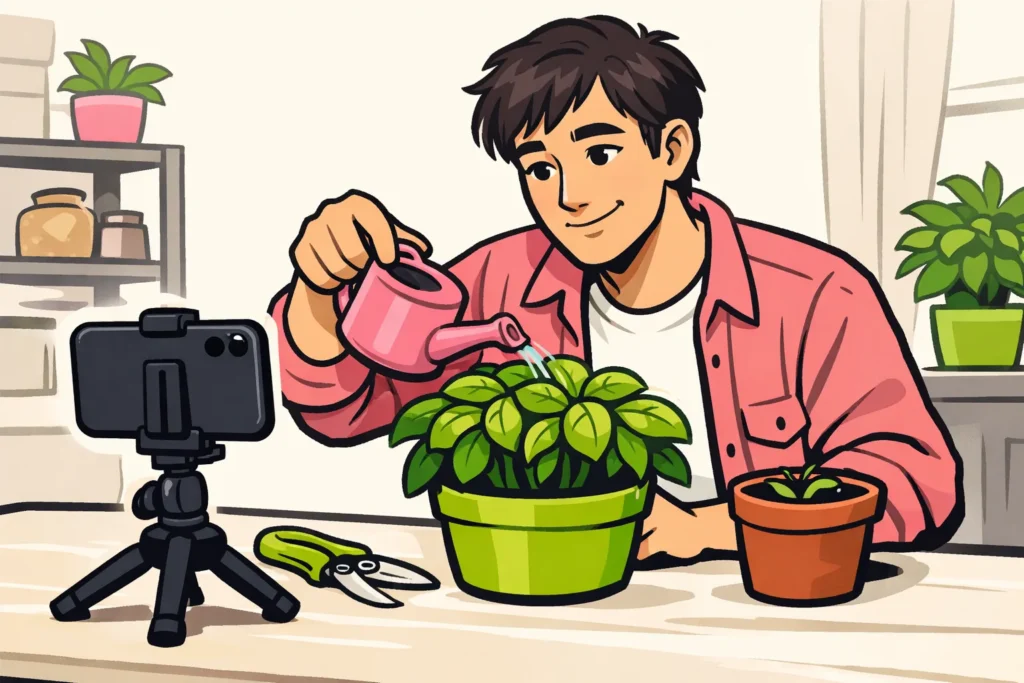
A fictional example: someone who makes videos about plants works with a handyman to show how to make a sturdy plant shelf. Agree beforehand who will show what and which channel the video will appear on.
See where new YouTube subscribers come from
18. Find where viewers subscribe
In YouTube Studio, look in the analytics for information about your subscribers. The YouTube guide to subscription sources describes where viewers clicked Subscribe. This overview may be unavailable when traffic is low.
A subscription source is the place where someone clicked the button. That does not yet tell you why the person subscribed. Treat it as a clue, not a complete answer.
Cannot find the overview? Screen names can differ. For now, compare the available figures over a longer period. Note which videos you posted during that period.
19. Compare in the same way and change one thing at a time
Where possible, check how many subscribers were added and how many were lost. Also look at views and how long people watch. Each figure tells you something different:
| Figure | What can you use it to examine? | What should you look for? |
|---|---|---|
| New subscribers | Which video or period brought in subscribers? | A video with more views also gets more chances to attract subscribers. |
| Lost subscribers | How many subscribers left during the same period? | The number does not tell you why someone left. |
| Views | How many times was a video watched? | This is the number of times the video was watched, not the number of unique people. |
| Watch time | How long do people keep watching? | Compare videos of roughly the same length and the same type. |
For example, compare the first fourteen days of two videos. A video that has been online for months has had more time than a video from yesterday.
Fictional calculation example: In one month, you gain 24 new subscribers and lose 7. Your growth is then 24 − 7 = 17 subscribers. This is called net growth: what is added after you subtract the subscribers lost. If you look only at the 24 new subscribers, your growth appears larger than it is.
For the next similar video, change only the beginning, for example. Write down what you did differently. A better result does not prove that your change caused it. It does give you a clue about what you could try next.
Is your total falling? Read why you are losing YouTube subscribers before changing your entire channel.
Bought YouTube subscribers do not guarantee real viewers
A higher number of subscribers does not mean that more people will automatically want to watch your next video. That difference is important if you are considering buying YouTube subscribers Bought numbers do not guarantee real fans, watch time, comments or reach that happens naturally. To compare quantities and prices, explore our YouTube services, including packages for subscribers and views.
A higher number also does not mean that YouTube approves of the service. So do not look only at your subscriber counter if you want to know how much interest there is in your channel. Also pay attention to whether people watch your videos and ask questions about the content.
Exchanging subscriptions says just as little about that interest. Someone may subscribe because you do too, not because they want to watch your videos.
Get more YouTube subscribers: choose your first improvement
Do not start with all 19 tips at once. Look at your last three videos and choose one improvement for your next video:
- Before someone clicks: make your title clearer or your thumbnail simpler.
- While watching: get to the topic faster, improve your sound or cut out repetition.
- After your explanation: give one short reason to subscribe that suits your next videos.
Then record the results after a set period. This lets you compare your videos in the same way.
Pay particular attention to titles that promise more than you show and topics that keep appealing to different viewers. Also do not draw major conclusions from one video that performs much better or worse. Use what you see to choose your next video for the same viewer.