Start as an influencer with YouTube if you enjoy explaining, testing or showing something in detail. Choose Instagram instead if you want to share short videos, photos and updates and often connect with your audience. Also consider how much time you have to create posts. First write down three ideas: can you show them briefly, or do they need more explanation?
Below, compare the options and find a 30 day test to help you make your choice.
Choosing YouTube or Instagram: what can you keep creating?
Do not choose only the platform you enjoy watching yourself. Think mainly about what you want to create for several weeks in a row. Filming is one part of the work. You also need time to edit your video and reply to comments.
| What do you mainly want to do? | Where do you start? | Why does that fit? |
|---|---|---|
| Answer one question fully | A long video on YouTube | You can keep all the steps, details and examples together. |
| Share short moments, photos and updates | You can create different types of short posts about the same subject. | |
| Show one quick tip or action | Reels or YouTube Shorts | You can start with short videos on both platforms. |
| Compare a product in detail | YouTube | You have room to show how it is used, the differences and the drawbacks. |
| Answer questions and have conversations often | Try Instagram first | You can alternate short updates with comments and messages. |
These are starting points, not fixed rules. You can also build connections on YouTube. And on Instagram, you do not have to post only quick videos.
Now develop one of your three ideas fully. Note how much time you need for planning, recording, editing and replying. Does that not fit into a normal week? Make your idea smaller before adding a second platform.
YouTube or Instagram for your audience in the Netherlands and Belgium
Do not assume that all young people are on one platform and all adults are on the other. Look where people interested in your subject ask questions and view posts.
- Write down three specific questions your audience might have. Search for them on both platforms.
- Check whether the posts look like what you want to create.
- Read the comments. Do people want more explanation, an example or simply a short answer?
- Ask the people you want to reach where they view this type of post.
For a Dutch speaking audience, you can do more than just name a country. For example, show whether a product is available there. Or provide a route from a station and use ingredients from a local supermarket.
A fictional example: you want to share affordable walks in Belgium. On Instagram, you show one attractive location with a short practical tip. On YouTube, you discuss the entire route, transport and difficult sections. The subject is the same, but you answer a different question.
When does a long YouTube video fit?
A long YouTube video is suitable if you want to explain several steps or differences. Think of replacing a bicycle tyre, making a dish or comparing two pairs of headphones. You do not have to fit the explanation into one short clip.
Before filming, write out this simple structure:
- Name the question you are going to answer.
- Show the most important steps or differences.
- Discuss what is difficult or disappointing.
- Finish with a clear answer.
Let the explanation determine how long the video will be. Can you show everything in three minutes? Then you do not need to make it ten minutes long. Keep in what the viewer needs to continue on their own.
Also include editing in your planning. Unsure where to cut? Read the explanation about editing a YouTube video. If you do not have a channel yet, start with starting a YouTube channel.
When do Instagram, Reels and Shorts fit?
Short videos suit one moment, one tip or one visible difference. For example, show how to roll up a loose trouser leg. You can save a full explanation of the fit for a separate post or a longer video.
On Instagram, you can alternate videos with photos and Stories. Stories are temporary updates on your profile. This works if you do not want to record a whole video for every idea. Posting and replying regularly also takes time, of course.
Do you mainly want to create short videos? Then you do not have to choose Instagram straight away. YouTube Shorts is also an option. Therefore, compare a Reel with a Short, not with a long video. Otherwise, you will not know whether a difference in comments is caused by the platform or by the type of video.
Try writing your idea down in one sentence. Can you show that sentence with one action or example? Make it a short video. If you need several steps or exceptions, a longer explanation is more suitable.
Making money on YouTube or Instagram
Neither platform offers you a fixed income. If you want to be able to plan your income, focus mainly on payment arrangements. An agreed fee for a job is easier to plan than income that depends on changing views or purchases.
| How do you make money? | What should you look out for? |
|---|---|
| Payment through the platform | Whether you can participate and how much you receive depends on the conditions and usage. Do not count on money you have not received yet. |
| A paid collaboration | Agree in advance what you will do, what you will receive and when you will be paid. Also record how the other party may use your footage. |
| Payment through a product link | You receive payment for a valid purchase. Clicking the link alone does not generate income. |
| Your own product or service | Take costs and your working time into account. Turnover is the amount that comes in, not what you have left after costs. |
Participation in the YouTube Partner Programme is subject to conditions. Read the official explanation of the YouTube Partner Programme before relying on this income.
For Shorts, advertising revenue is distributed separately. In the explanation of income from YouTube Shorts you can read how this works. So do not assume that Shorts generate the same returns as long videos.
Also do not count on a fixed payment from Instagram. First check which options are available for your account.
If you want to show a product, the type of product also matters. A detailed explanation of a sewing machine calls for something different from a short video about a hair clip. Choose the format in which you can clearly show the advantages and limitations. That choice alone says nothing about how much you earn.
Combining YouTube and Instagram with the same footage
Choose one main platform and create your complete post for it. Use the other only if you can make something from the same footage that is also useful on its own.
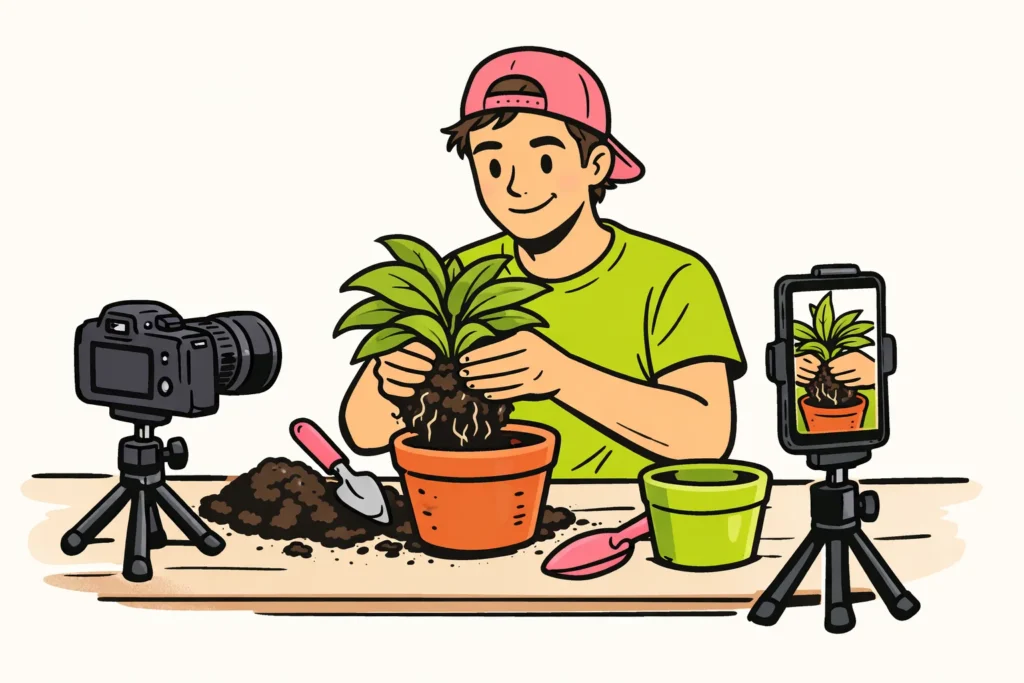
A fictional example: you film for YouTube how to repot a plant. While filming, you also make a short vertical clip about loosening the roots. You use that as a Reel. The Reel gives one tip and the long video shows all the steps.
This means you do not have to come up with separate subjects and recordings for each platform. Decide in advance how much extra time you want to spend on it, for example one hour per week. Cannot you do it within that time? Then stay with one platform for the time being.
Testing YouTube or Instagram in 30 days
Start with a small comparison of Reels and Shorts. You are then testing the same type of videos on two platforms. This trial does not yet show whether long YouTube videos suit you better.
Choose one subject, a fixed video length and one goal. For example, you can look at where people ask questions about your tips. Also keep track of how much time each platform takes you.
| Period | What do you do? | What do you change? |
|---|---|---|
| Days 1 to 3 | Create three short videos about one subject. Decide how much time you want to spend and what you will track. | Nothing yet. You are preparing the trial. |
| Days 4 to 10 | Post each video on both platforms, on the same day and around the same time. Use the same footage, text and question. | For each pair of videos, only the platform differs. |
| Days 11 to 17 | Record the results of each post exactly seven days after posting. | Do not change the posts during this period. |
| Days 18 to 23 | Provisionally choose one platform. Create and post three comparable tips with the same length and structure. | Change only the beginning. For example, show the result straight away instead of opening with a spoken question. |
| Days 24 to 30 | Again, record the results after seven days for each post. Also compare your working time and whether creating the posts fitted into your week. | Do not add another subject or a new type of video yet. |
New tips are never exactly the same as earlier tips. You may also already have a different audience on one platform than on the other. Therefore, use the result to make a choice for your own account. The trial does not prove that one platform always works better.
What do you track?
- How many minutes you spend creating, posting and replying.
- The number of views after seven days, separately for each platform.
- The number of comments that are genuinely about your subject.
- Questions and requests that you can create a subsequent post about.
- Whether you want to keep up this routine for another month.
Views are not unique viewers: someone may watch more than once. Nor do five comments necessarily come from five different people. So do not choose based only on the highest number.
A fictional calculation example: you spend 180 minutes on three videos and posting them on both platforms. Then 180 minutes divided by 3 videos is an average of 60 minutes per video for the entire trial. That is not 60 minutes per posting. Record extra time for each platform separately, so you can see where the work is.
After day 30, choose the platform where you receive useful comments and that fits within your available time. Is the difference small? Repeat the trial without making new changes.
If viewers keep asking for more explanation, then test one longer YouTube video. Assess it separately. That way, you do not change the platform, subject and video length at the same time. If you are also considering paid options, our Instagram services lets you compare packages for followers and likes, including the available quantities and prices.