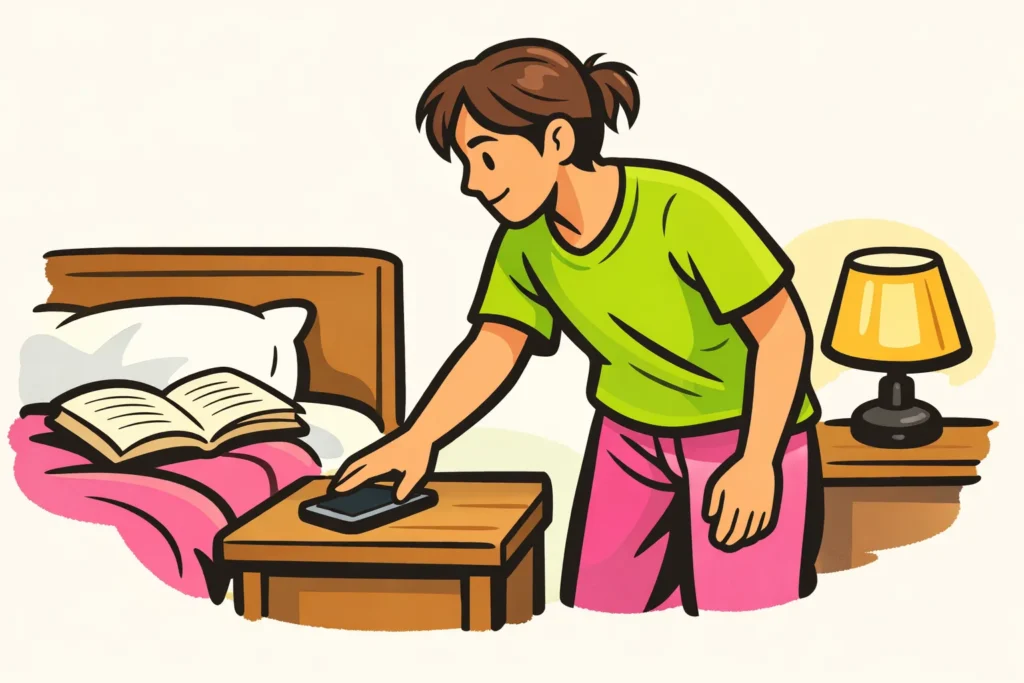
TikTok can get in the way of your sleep, concentration and mood, especially if you watch for longer than you intended. That does not mean the app has been shown to damage your brain or automatically causes an addiction. Pay particular attention to what you do not manage to do because of watching: get enough sleep, do your homework or meet up with others. A first step: put your phone out of reach when you go to bed.
Read below to find out how to recognise when TikTok is getting in your way and what you can do about it.
What does TikTok do to your brain and mood?
You open TikTok to watch one video, but keep watching anyway. With every swipe, another new video is ready. So there is no obvious moment to stop.
Finding it difficult to stop does not prove that your brain is damaged. It also does not immediately mean that you are addicted. Pay particular attention to how you feel while and after watching, and what you leave undone because of it.
Trimbos describes associations between highly visual social media, body image, anxiety and depressive feelings among young people. Such an association does not prove that TikTok causes these problems.
Your body image is how you think about your own body. Do you feel worse about your appearance after watching certain videos? Pay attention to which images trigger that feeling. It is not only how long you watch that matters, but also what you see and how it makes you feel.
Would you also like to read about other disadvantages? See why TikTok can have disadvantages.
How can TikTok disrupt your sleep and concentration?
If TikTok makes you go to bed later, you have less time left to sleep. The app does not need to damage your brain for this to happen: watching takes the place of your night’s rest.
A fictional example: you want to go to sleep at 23.00, but watch until 23.45. Your alarm still goes off at 07.00. Your time in bed then falls from 8 hours to 7 hours and 15 minutes. This is not the same as your actual sleep time, because you do not always fall asleep immediately.
Concentration is also affected by interruptions. Do you keep opening TikTok while reading or doing homework? You then have to find where you left off. That does not mean your attention has permanently become worse.
Try doing one task without opening TikTok in between. Keep your phone out of sight. Choose something specific, such as reading one page or doing the dishes. Afterwards, see whether you had to start again less often.
Is TikTok particularly harmful to young people?
For young people, it is especially important to pay attention to sleep, school and how they think about themselves. Still, you cannot say that TikTok is harmful to every young person. Adults can also be affected.
The Dutch government advised in June 2025 that children should only start using social media such as TikTok from the age of 15. This was advice, not a general legal ban.
Problems can still arise from that age onwards. The Dutch advice is also not a Belgian rule.
Are you a parent or carer? Do not only ask how long your child watches, but also what they watch. For example: “Which videos do you like?” and “Are there images that make you feel bad?”
Make clear agreements together, for example about where the phone stays at night. This allows you to discuss both the videos and the time your child spends on TikTok.
When does watching TikTok become a problem?
Pay attention to problems that keep recurring and to how well you manage to stop. Watching for longer on one evening says less than a habit that disrupts your daily life. These signs deserve attention:
- You regularly keep watching even though you wanted to stop.
- You often go to sleep later because of TikTok.
- Schoolwork, work or appointments are left undone.
- You often feel tense, down or insecure after watching.
- You try to watch less, but it keeps not working.
This list is not a test that can be used to diagnose an addiction yourself. The signs can nevertheless help you see what is troubling you.
There is no fixed amount of screen time that is safe for everyone. Even a short video can make you feel bad. Conversely, watching for longer does not in itself tell you enough: what matters is what you watch and what you do not do as a result.
How can you use TikTok more consciously?
Start with the problem that troubles you most. Do you go to sleep too late, keep putting off tasks or feel bad after watching? Choose a suitable change for that problem.
- Keep track of how you watch for a few days. Note when you open TikTok, when you stop and how you feel afterwards. Also write down what you actually intended to do.
- Choose a clear stopping point. For example, close the app as soon as you start dinner. A separate timer can remind you of this agreement.
- Put your phone away before going to sleep. Choose a fixed place out of reach. If necessary, use a separate alarm clock.
- Pay attention to which videos you watch. Do not keep watching images that repeatedly make you feel bad. Close the app or do something else.
- Make it easy to do something else. Put out a book, place your shoes by the door for a walk or call someone you wanted to speak to.
After a week, see what you notice. Are you going to bed on time? Do you finish your task more often? Do you feel different after watching? This helps you find out what works for you; it is not a medical test.
Does an agreement not work? Then make it clearer when you will stop and what you will do afterwards, instead of only agreeing on fewer minutes.
When should you seek help for TikTok related problems?
Contact your GP if you continue to sleep poorly, remain anxious or low, or if school, work and contact with others are suffering. You do not first have to be certain that TikTok is the cause.
Tell them what you notice, how long it has been going on and what you have already tried. For example, you could say: “I keep watching in the evening even though I want to stop, and I am always tired during the day.” This makes clear what you would like help with.
Are you young? Talk about it with a parent, carer or someone at school whom you trust. Watching less TikTok can be a step. If problems persist, it is important to look together beyond your screen time as well.