Do you want to get more views on TikTok? Make it immediately clear what your video shows. Start with the result or the action, choose one topic and remove unnecessary explanations. Look at your last three videos: what can you make clearer in the first few seconds? Then test one change at a time so you can compare what works for your viewers.
Below you will find ten tips and a calculation example to get started yourself.
Why Is Your TikTok Getting Few Views?
A low number of views does not immediately show you the cause. Maybe the topic is unclear or the beginning takes too long. You may also have too few similar videos to see what works.
TikTok’s explanation of recommendations mentions what users do, information about the content and user data as factors. How long someone watches is one example.
There is therefore no single trick that can force a spot on the For You feed. Start with what you can change yourself: your topic, your opening and how clearly you show something.
- Few views: compare several videos before deciding that an approach does not work.
- Viewers stop watching early: check your analytics to see where that happens, if you have that data. Is there a long explanation or pause there?
- Exactly zero views: read the separate explanation of why your TikTok has 0 views.
Do you mean visitors to your profile, not views of your video? Then read what you can check if you cannot turn on profile views on TikTok. That is separate from getting more video views.
10 Tips to Get More Views on TikTok
1. Answer One Clear Question
Before you start filming, complete this sentence: “After watching this video, you will know how to…” Do you need a long list? Choose one part and save the rest for a later video.
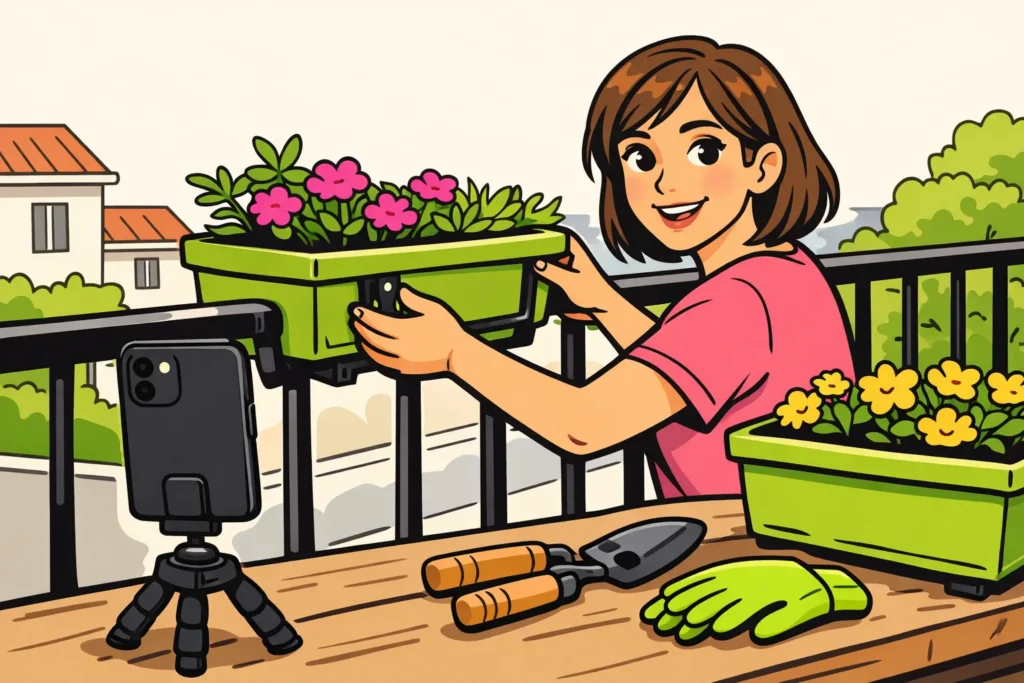
Suppose you are redesigning your balcony. You do not have to fit everything into one explanation. For example, show how to hang one planter. Then you also know which shots you need.
2. Show Immediately What It Is About
Start in the first second with the result, the problem or the action. You do not need to introduce yourself first or say that you are going to make a video.
For example, you can open a cooking video with: “This is how to keep the base of your quiche firm.” Show a cut piece immediately and then explain the steps. In the video, do provide the explanation you promise at the beginning.
3. Cut Out Unnecessary Parts
Watch your recording and ask yourself about each part: does the viewer need this to understand the explanation? Cut out repeated explanations, long silences and looking for items.
There is no video length that works for every topic. A folding trick may need little explanation, while a repair may need more. Keep your video short, but do not skip important steps.
4. Ensure a Clear Image and Understandable Speech
Film closely enough to show the details. Place your phone securely and make a short test recording. Can you hear your voice clearly? Are your hands not blocking the detail you want to show?
First try more daylight and a quieter place before considering an expensive phone. Do you use subtitles? Then check whether the words and names are correct.
5. Explain in Your Description What You Are Showing
The text below your video is also called a caption. Simply describe what your video is about. “A lunch for on the go without a microwave” says more than “You need to see this”.
For example, are you making a walking video in Ghent or Utrecht? Mention the place if it is important to the video. This tells the viewer where you are. It does not mean that TikTok will show your video there more often.
6. Choose Hashtags That Match Your Topic
Use hashtags that describe what can be seen in your video. For hanging your planter, for example, #balkonplanten is suitable. Leave out popular hashtags if they have nothing to do with your topic.
In the Dutch language TikTok tips from 2021 it states that #FYP and #ForYou on their own do not increase the chance of getting a spot on the For You feed.
Therefore, choose relevant words and spend the rest of your time on your video.
7. Choose Sound That Adds Something
For an explanation, your voice must be easy to understand. Are you filming yourself refurbishing a cabinet? Then the real sounds can add something, such as sanding, painting and sliding a drawer shut.
Do you want to use a popular sound? Listen to whether it fits the mood and the action. A recognisable sound does not make an unclear video clearer and does not guarantee more reach.
8. Try Two Posting Times
There is no single best time to post for everyone. Choose two times when the people your video is intended for may have time. Are you posting about school or studying? Then, for example, you can try after classes and later in the evening.
Can you see in your analytics when your viewers are active? Use that information as a starting point. If you do not have that data, choose two times yourself that are feasible for you and note them down. When comparing, take into account whether you post on a weekday or at the weekend.
During this test, keep your topic, video length and style as similar as possible. If you change everything at once, you will not know what may have made the difference.
9. Follow Up on a Viewer’s Question
Is someone asking under your video about something you can show well? Make your next video about it. You then know which explanation that viewer is missing.
A fictional example: under a video about repairing a bicycle tyre, someone asks how to find a small hole. You can show that in a separate video. Make sure the explanation can also be followed by someone who has not seen the first video.
Do you want to know what makes a video suitable for being shared widely? Read more about going viral on TikTok.
10. Test One Change and Measure After the Same Amount of Time
Choose one question to test. For example: do I get more views if I show the final result first? Make a few similar videos with different openings. Keep the topic, length and posting time as similar as possible.
Record the views after the same amount of time each time, for example after 48 hours. You choose that measurement point yourself; it is not a TikTok rule. So do not compare a video that has been online for two hours with a video that is a week old.
| Opening | First video | Second video | Average |
|---|---|---|---|
| Spoken explanation first | 420 | 580 | 500 |
| Final result shown first | 650 | 750 | 700 |
Here is how you calculate the average number of views per video:
- Spoken explanation first: 420 + 580 = 1.000 views. Divide this by two videos: 1.000 ÷ 2 = 500 views on average.
- Final result first: 650 + 750 = 1.400 views. Divide this by two videos: 1.400 ÷ 2 = 700 views on average.
In this example, the second approach has an average of 700 − 500 = 200 more views. That is a reason to test further, not proof that the opening made the difference. Four videos are still too few to draw a conclusion. The content may also make a difference.
Views are views, not automatically different people. Also check the average watch time if you have that data. That is how long your video is watched on average. For this, compare mainly videos that are approximately the same length.
Does Buying TikTok Views Help Increase Visibility?
Purchased views are not the same as genuine attention. They do not show that someone finds your explanation useful, wants to see your next video or wants to become a customer. Nor can you infer from them that TikTok will recommend your video more often.
Are you considering buying TikTok views? Treat that as a separate paid service, not as evidence of organic growth. Here, that means people finding your videos without purchased views. To compare quantities and prices, explore our TikTok services, including packages for views and followers.
Are you testing which opening or posting time works? Then use videos without purchased views. Otherwise, you cannot properly see from the number of views what your own approach produced.
More TikTok Views: Check Your Next Video
Choose one improvement for your next video. Check these points before posting:
- Is it immediately clear what you are showing?
- Are you answering one specific question?
- Can you remove an introduction, silence or repetition?
- Are the action and your voice easy to follow?
- Do your description, hashtags and sound fit the video?
- Have you written down what you are testing and when you will check the views?
Keep your notes together. After a few similar videos, compare the results and choose which approach you want to try further.