TikTok is described as a security risk because of concerns about personal data, access from China and the protection of young people. TikTok has received a privacy fine, but that does not prove that the app spies on everyone. Start by checking your phone yourself: see what access TikTok has and revoke permissions you do not need.
Below, you will read what is known, what concerns are involved and how to use the app more cautiously.
Why do governments see TikTok as a security risk?
Governments want to prevent sensitive data from ending up with the wrong people. So it is not only about who can see a video. It also matters what data an app can access and who has access to it.
A work phone may contain business contacts and confidential messages. If such information is leaked, the consequences can be serious. That explains why an employer may set stricter rules for apps on a work phone. It does not mean that TikTok can read those messages.
Influence over information also matters. The selection of videos determines which topics you see often. This can raise concerns about influence, but it is not proof that a government controls your feed.
When it comes to security, three questions are often mixed together:
- Privacy: which personal data does the app use and with whom is it shared?
- Account security: can someone else log in to your account?
- Safe use: could you encounter unwanted contact or harmful videos?
These risks require different measures. A strong password helps prevent unwanted logins. It does not determine what TikTok does with collected data.
What is known about TikTok, privacy and China?
According to the Irish data protection authority TikTok received a fine of 530 million euros in 2025 for transferring European users’ data to China and providing too little transparency about it.
The fine falls under the GDPR, the European privacy law. This law sets rules for using personal data. The fine decision is therefore an established fact, not a suspicion.
Concerns about China mainly relate to data protection. What happens if data is processed outside Europe or can be accessed from there? Who can access it, what protections apply there and how can you exercise your rights as a user?
The fine does not prove that the Chinese government receives all European users’ data. Nor can you conclude from this that TikTok has been proven to be spyware. Spyware is software that secretly collects information to spy on someone.
| Claim | What does this mean? |
|---|---|
| TikTok has received a privacy fine. | This is an established decision from 2025. |
| There are concerns about access to data from China. | They concern data protection. They do not automatically mean that espionage has been proven. |
| A government bans an app on work phones. | This may be a precautionary measure. The ban itself does not prove misuse. |
| Every TikTok user is being spied on. | The facts mentioned do not support that conclusion. |
Is TikTok banned in the Netherlands or Belgium?
A ban on government phones is not the same as a ban for all residents. So a message about work phones does not mean that you cannot use TikTok privately.
The rules of your organisation apply to your work phone. Do you work for the government? Ask the department that manages your phone whether TikTok is allowed. Also ask them to explain what any restriction applies to:
- The entire work phone?
- A separate part of the phone set up for work?
- Your own phone as well, if you use it for work?
Do not try to get around a restriction by installing the app anyway.
Do you use TikTok only privately? Then pay particular attention to the data you share, who can contact you and the security of your account. A ban on work phones does not precisely indicate how large your personal risk is.
What risks does TikTok pose to children and teenagers?
According to the European Commission’s preliminary findings of 24 July 2026 TikTok did not sufficiently protect minors under the European rules for digital services. This was not a final finding.
Would you like to know what to look out for as a parent? Look together at what your child shares and experiences in the app:
- Is a school name or regular sports venue recognisable in videos?
- Does your child know what to do if they receive an unpleasant message from a stranger?
- Does watching take time away from sleep, or does your child watch for longer than agreed?
- Does your child feel comfortable discussing upsetting or confusing videos with you?
Suppose your child wants to post a dance video wearing a jumper with a school logo. That logo could reveal where your child goes to school. Cover it up or choose a different item of clothing before filming.
Also agree that your child will not send login codes, their address or private photos to strangers. You can find more information in the article about whether TikTok is safe for children.
How can you use TikTok more safely?
Start with what you share yourself and what access you allow. The steps below help with different risks. They do not change how TikTok handles collected data behind the scenes.
- Check access on your phone. Look for TikTok and the app permissions in your phone settings. These are the permissions you give an app, for example for your contacts, location, camera or microphone. Revoke access you do not need. Some features may no longer work afterwards.
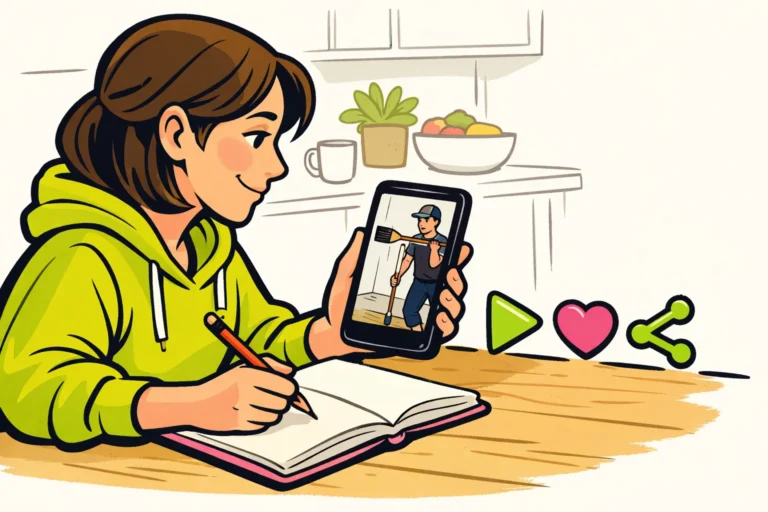
- Review your video before posting it. Pay attention to the background too. Is there a letter with your address lying around? Is a work document readable? Remove the sensitive part or record the clip again.
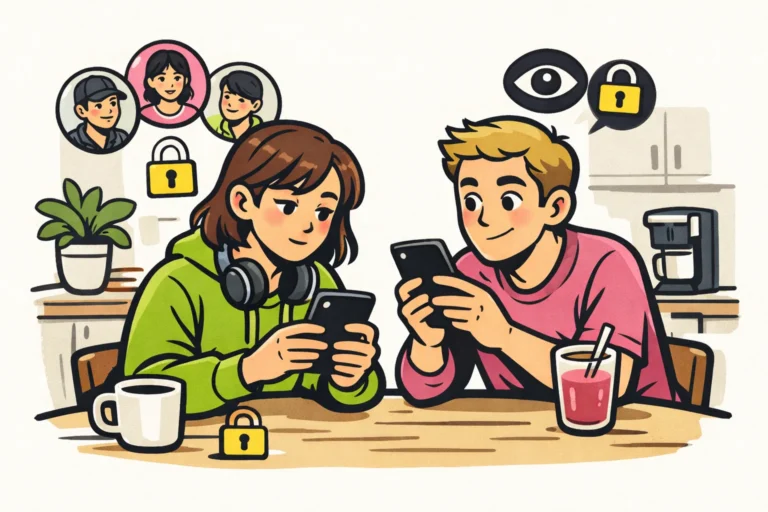
- Check who can see your messages. Review the available visibility and contact choices. A private profile does not mean that the app no longer processes personal data. Read more about why your TikTok account is private.
- Choose a password that you do not use anywhere else. Also secure the email account that you can use to recover access to TikTok. Where possible, enable an additional login check, such as a second step alongside your password.
- Watch out for unexpected links in messages. Did you receive a warning that your account will be removed immediately? Open the app yourself to check. Do not enter your password through an unexpected link and do not share login codes.
- Install updates for your phone and the app. This also gives you the available security improvements.
The names and locations of settings may differ between phones and app versions. Cannot find a setting? Use the search function in your phone settings or the help section in the app. Do not assume an option is enabled if you cannot see it.
When should you be extra careful with TikTok?
Be extra careful if your phone provides access to sensitive data. Think of information about patients, students, customers or government work. Follow your employer’s rules and keep work and private life separate as required by your organisation.
You can also accidentally share information while filming. A fictional example: you record a video during your break while a roster with names is hanging behind you. In that case, you share the information yourself through the image, regardless of which app you use.
Do you not want to give TikTok any further access through the app? You can delete the app. This does not automatically erase data collected previously. It also does not automatically delete your account. These are separate matters. If you also publish your own content, our TikTok services includes packages for followers and likes. The product pages show the available quantities and prices.